

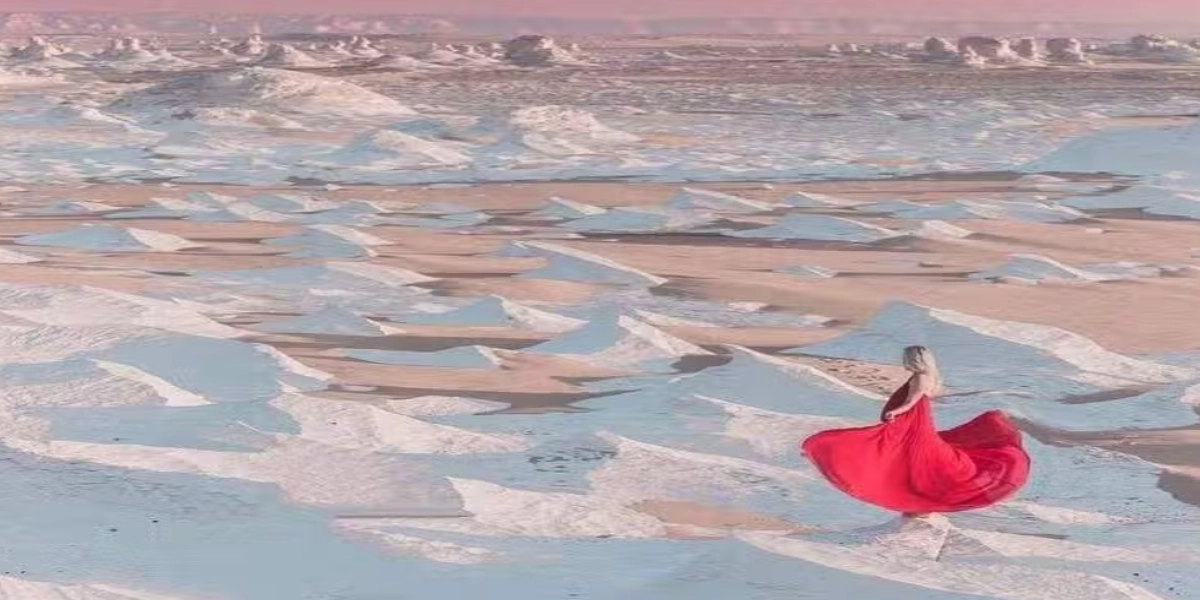
 White Desert
The White Desert of Egypt is more than a natural wonder it’s a photographer’s dreamscape, Stretching endlessly across the Western Desert, this surreal land of chalk formations glows gold at sunrise and shimmers silver at sunset. Every angle tells a story, and every shadow holds a secret, If you’re seeking to capture Egypt’s desert magic through your lens, this is your ultimate guide.
1. The Magic of Light in the White Desert
The White Desert’s beauty lies in its ever-changing light.
At dawn, the horizon blushes with soft pinks and oranges, casting a delicate glow over the ghostly limestone shapes. By sunset, those same rocks turn into molten gold, glowing against a lavender sky.
The contrast between warm tones and white terrain creates a cinematic backdrop that feels almost unreal.
For the perfect photo, plan your shots around “golden hour” an hour after sunrise and before sunset. The low sun accentuates textures and creates depth across the chalk formations.
2. Sunrise Hotspots
If you love calm, ethereal lighting, sunrise is your time. Some of the most breathtaking spots include:
Mushroom Rock Field:
These iconic white formations, shaped by wind and sand, stand tall in silence. Early morning rays illuminate them from the side, creating soft highlights and long, poetic shadows.
Valley of the Mushroom:
The valley’s clustered rocks catch the first sunlight perfectl, Photographers love how the golden rays slide across the desert floor, revealing the sculpted patterns of time.
The Sleeping Camel Formation:
At dawn, the famous “camel-shaped” rock casts a stunning silhouette against the pastel sky — a perfect shot for minimalist landscape photography.
3. Sunset Photography Spots
When the day fades, the White Desert transforms again, this time into a stage for color and contrast.
The Crystal Plateau:
Though slightly beyond the main White Desert area, the plateau reflects sunset light beautifully, especially when the crystals catch the final glow of the sun.
Old Camp Area:
Set up near one of the traditional camping zones for wide-angle shots of the desert’s horizon, Here, you can capture not only the fading light but also the silhouettes of travelers and jeeps returning home.
The Chicken and Tree Formations:
These two famous rocks face west ideal for capturing them with the burning orange of the sinking sun behind.
4. Camera Tips for Desert Photography
- Bring a Tripod: For low light and long exposure shots during sunset.
- Use a Polarizing Filter: It enhances the blue sky and reduces glare from white surfaces.
- Protect Your Gear: The desert wind carries fine sand — use lens covers and zip bags when not shooting.
- Experiment with Shadows: In the White Desert, shadows are as expressive as the light itself.
- Try Night Shots: Stay overnight and capture the Milky Way; few places on Earth offer such a clear, star-filled sky.
5. Timing and Best Seasons
The ideal months for photography are October through April, when temperatures are cooler and skies are clearer.
Plan to arrive at your shooting spots 30–45 minutes before sunrise or sunset, as the best colors appear just before and after the sun touches the horizon.
6. Beyond the Lens — The Experience
Photography in the White Desert is not just about the picture it’s about the moment.
Standing among ancient stone shapes as light dances across the sand, you realize why so many photographers describe this place as “another planet.” Each frame you capture becomes a memory — a whisper of Egypt’s timeless desert soul.
7. A Photographer’s Dream, A Traveler’s Treasure
Whether you’re a professional with a DSLR or an adventurer with a smartphone, the White Desert offers more than beauty it offers emotion.
Every sunrise tells of peace. Every sunset speaks of mystery And when you finally pack your camera, you’ll know that no photo can truly capture what your eyes have seen yet you’ll keep trying, just to relive that magic once more.


